
Your room isn’t messy. It just has nowhere to put things
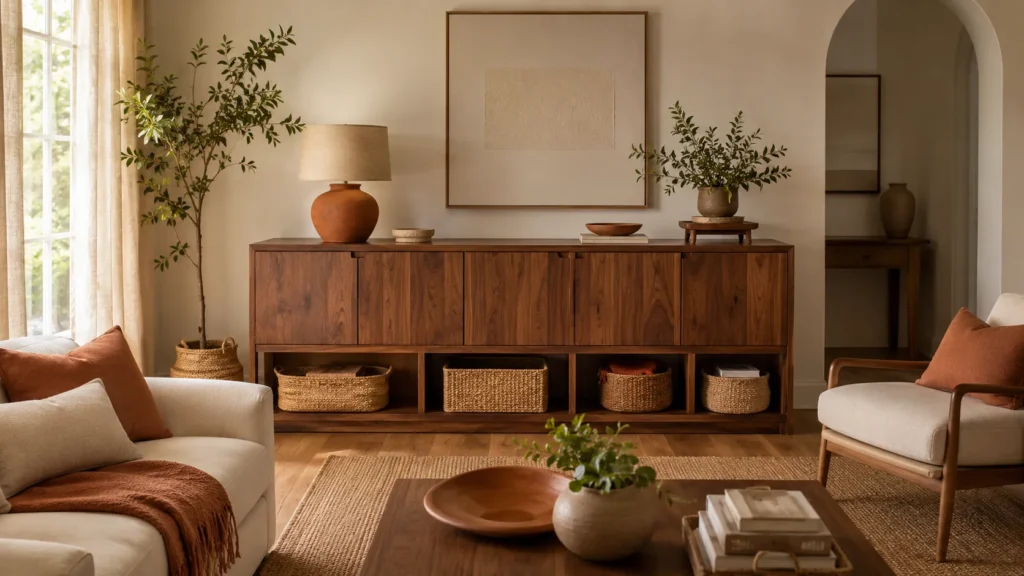
You tidy it. It just doesn’t stay tidy; room feels cluttered again — and it never quite looks calm, even on the days you’ve cleared it. That’s the signature of a storage problem, not a habits problem. Things aren’t out because you left them out; they’re out because they have nowhere specific to go. Every object is homeless, so every object lives on a surface.
The good news: this is one of the most fixable room problems there is. You’re not owning less or tidying harder. You’re adding somewhere for things to live — and once the count of homeless objects drops, the room reads as calm without you doing anything differently.
This page contains affiliate links. As an Amazon Associate we earn from qualifying purchases — at no extra cost to you.
Why This Is Your Result
If this is your room, some of these will feel familiar:
- You tidy the same three surfaces over and over
- Flat surfaces fill up within days of being cleared
- There’s a chair, a corner, or a table that collects everything
- You own storage, but it’s full of things you don’t use
- You’d describe the room as “cluttered” before you’d describe its style
The core idea: clutter isn’t about how much you own — it’s about how many things have no assigned place. A room with plenty of things and clear homes reads ordered. A room with few things and no homes reads chaotic. Fix the homes, not the habits.
Where to Start
You don’t need everything below. Storage builds in three stages, cheapest first — start wherever your room needs it most, and each stage does more than the one before it.
Start Cheap — Contain the Daily Clutter
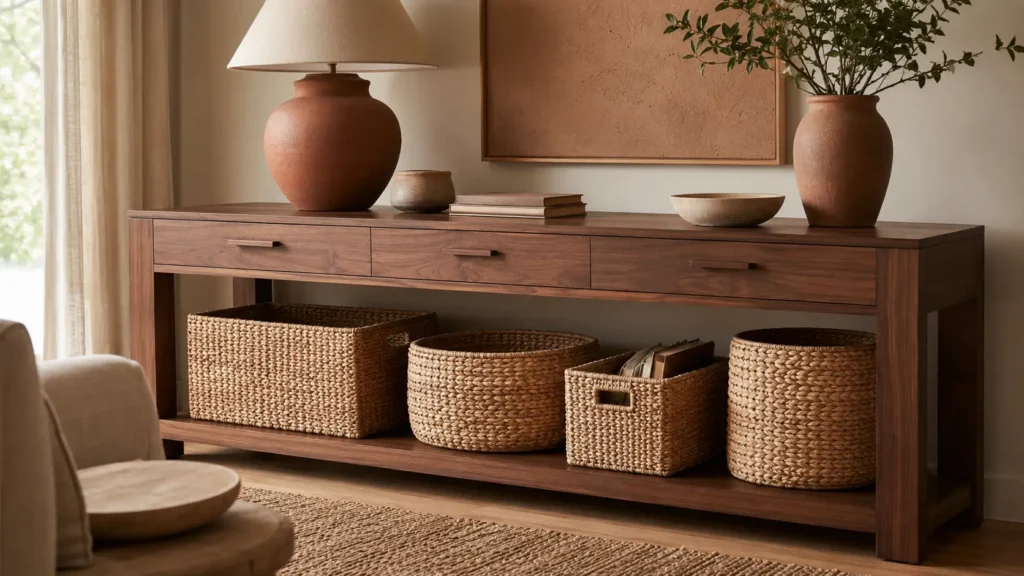
The fastest relief costs the least. A woven storage basket or two, placed where the mess already collects, catches the everyday overflow before it spreads across surfaces — and the right ones look like decor, not like bins. Our guide to storage baskets that actually look good covers which to buy and where to put them.
The other five-minute win is the cable tangle: a cable management box hides the worst knot in the room. Full walkthrough in how to hide cables and cord clutter.
The Real Fix — One Piece of Hidden-Storage Furniture
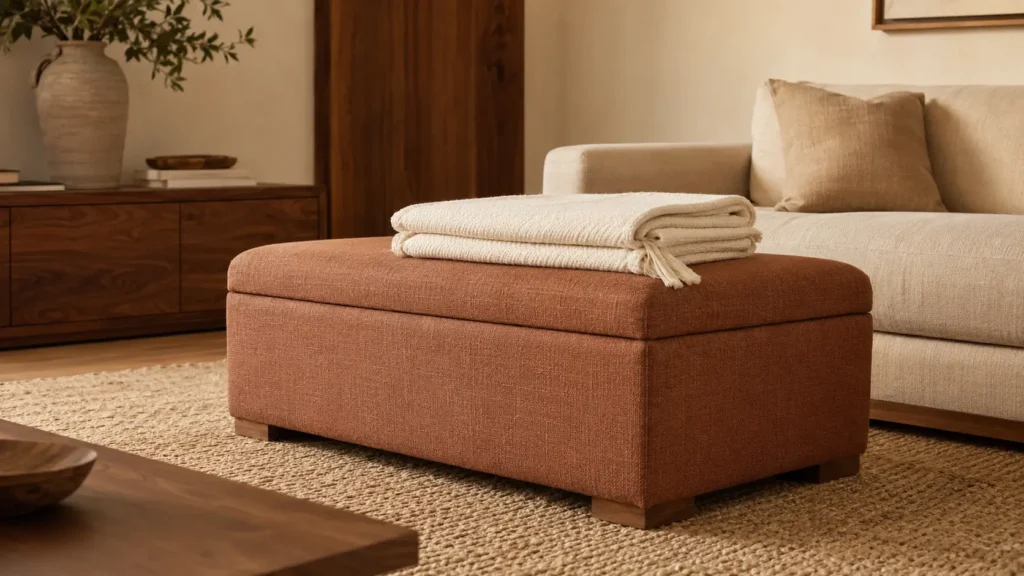
This is where a cluttered room actually turns. A storage ottoman swallows a large volume of clutter and gives you a footrest and extra seat on top — the best-value piece you can buy. A coffee table with a drawer or shelf clears the busiest surface in the room. See the full range in the hidden-storage furniture guide and the coffee table storage guide.
The Full Room — A Closed Home for Everything Else
For the miscellaneous stuff that has no category, a cabinet or console with doors gives the room a closed home so it reads as calm even on a bad day. If space is tight, the small living room storage guide shows how to store just as much using wall height and corners instead of floor.
Common Mistakes to Skip
Buying storage before deciding what goes in it. An empty basket bought hopefully becomes another surface within a week. Decide what it holds first, then buy for that.
Storing things far from where you use them. If the blankets live in a bedroom cupboard but you use them on the sofa, they’ll live on the sofa. Storage only works where the object already lands.
Choosing open shelving for everything. Open storage displays; it doesn’t hide. Rooms that feel cluttered usually need closed storage, not more open ledges.
Ignoring vertical space. Most rooms have used all their floor and none of their walls. Height is free space you already own.
The One Rule
Put storage where the mess actually happens, and choose it in your room’s warm-neutral tones — woven baskets, walnut and clay, nothing plastic or cold — so it reads as part of the room rather than as storage parked in the corner. Get that right and the room holds its shape on its own.
Read Next
- Why your living room always looks cluttered (after you tidy)
- Living room storage ideas for when you have too much stuff
- Toy storage ideas that blend into a grown-up living room
Get Your Room Plan in Your Inbox
Get your storage plan as a simple, save-it-for-later guide — plus practical décor notes, no spam, unsubscribe anytime.