
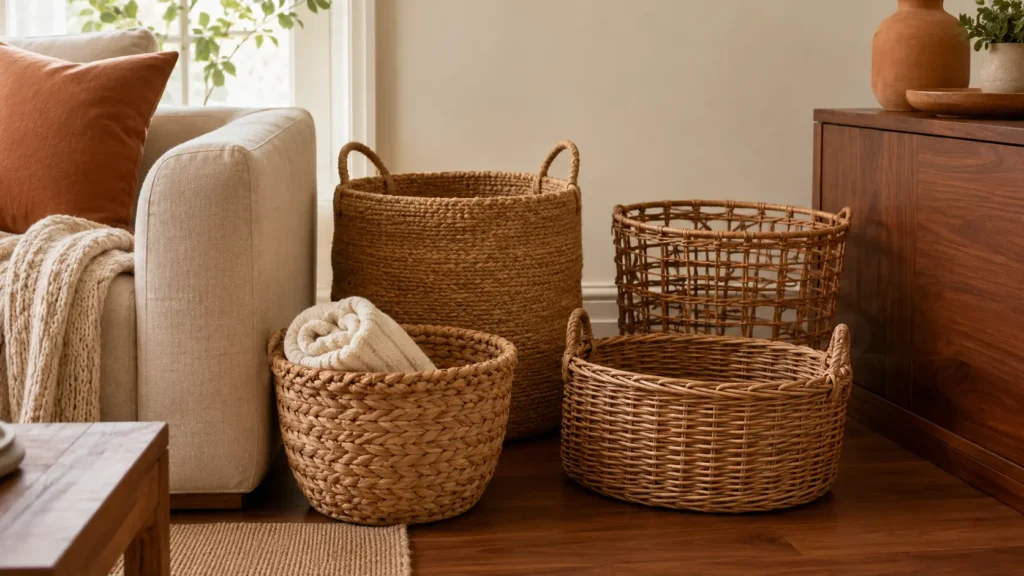
The problem was never decorative storage baskets themselves — it was using the wrong ones for the job. Most people already own storage baskets. They’re just the wrong ones — the plastic tub in the corner, the wire mesh thing from the hardware store, the fabric cube that’s started to sag. They hold your stuff, technically, but they look like clutter themselves. So the room never feels calmer, even though it’s more organised.
How to Choose Decorative Storage Baskets
The fix isn’t more baskets. It’s baskets that look like they belong in the room — warm, natural, textured — so they add to the space instead of fighting it. Get that right and a basket stops being storage you tolerate and becomes something you’re happy to leave out in the open.
This post contains affiliate links. As an Amazon Associate we earn from qualifying purchases — at no extra cost to you.
Why Woven Beats Plastic Every Time
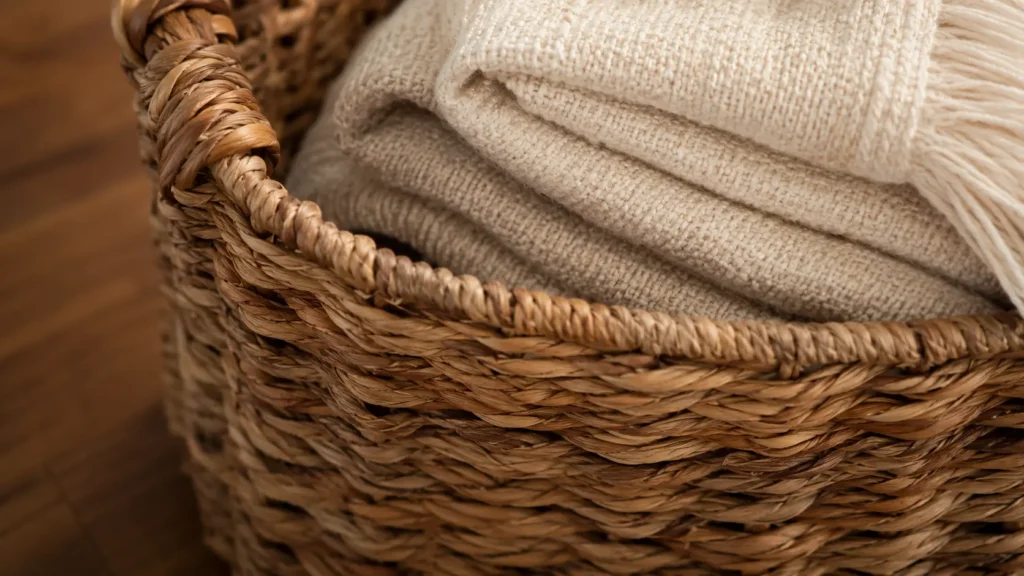
A plastic bin reads as utility. Your eye clocks it as “storage container” and files it next to the recycling. A woven basket reads as texture — the same way a throw or a rug does — so your eye treats it as part of the room’s warmth, not as a thing to be hidden.
That’s the whole trick. In a room you want to feel cozy, every surface and material is either adding warmth or draining it. Natural fibres — seagrass, jute, water hyacinth, cotton rope — add it. Plastic and wire drain it. Swapping one for the other changes how the whole corner feels, before you’ve even filled the basket.
The Three Basket Types Worth Owning
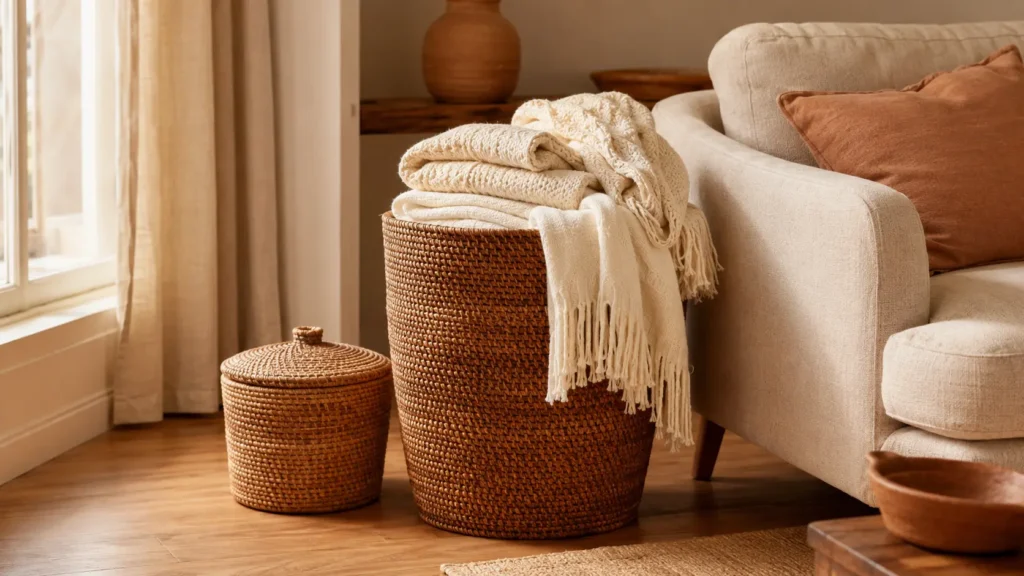
Tall floor baskets. The workhorses. A large woven floor basket beside the sofa swallows throws, spare cushions and blankets — the bulky soft stuff that otherwise piles on the arm of the couch. One tall basket clears more visual clutter than any other single thing you can buy.
Medium lidded baskets. For anything you’d rather not see. A basket with a lid hides the contents completely, which means it can hold the un-pretty stuff — chargers, kids’ bits, the random overflow — and still read as calm from across the room. The lid is what lets you be honest about what’s inside.
Small open baskets and trays. For the daily churn. A shallow basket or tray on the coffee table or console corrals the remotes, coasters and small things that make a surface look busy. Small, but it’s the one you’ll reach
for most.
Where to Actually Put Them
The rule that makes baskets work: place them where the mess already collects, not where they look neatest in a photo. Storage that’s inconvenient doesn’t get used — the clutter just piles up next to it instead.
- Beside the sofa — for throws and blankets, within arm’s reach of where you sit
- Under the coffee table — for the everyday overflow, tucked but accessible
- By the entry point — for bags, shoes and the things that land the second you walk in
- On a shelf or console — smaller baskets to hide the odds and ends on open storage
- In a corner — a tall basket turns dead space into storage
Matching Baskets to Your Room
Baskets in the same tone as your room disappear into it, which is exactly what you want for storage. In a warm, neutral space, natural fibres in oat, wheat and warm brown tones sit quietly and read as texture rather than objects.
You don’t need them all to match perfectly — a mix of weaves and heights actually looks more collected and less like a matched set from a catalogue. What you do want is consistency of tone: keep them all in the warm-neutral family and skip anything bleached-white or grey, which reads cold against a cozy room.
Where to Start
If you’re buying one thing, make it a tall floor basket for beside the sofa — it clears the most visible clutter for the least money. Add a lidded medium basket next for the stuff you’d rather hide, and a small tray for the coffee table churn. Three baskets, placed where the mess actually happens, and the room holds its shape on its own.
Not sure whether baskets are what your room needs most, or whether it’s a bigger storage piece? The quiz below reads your space in about two minutes and tells you where to start.