
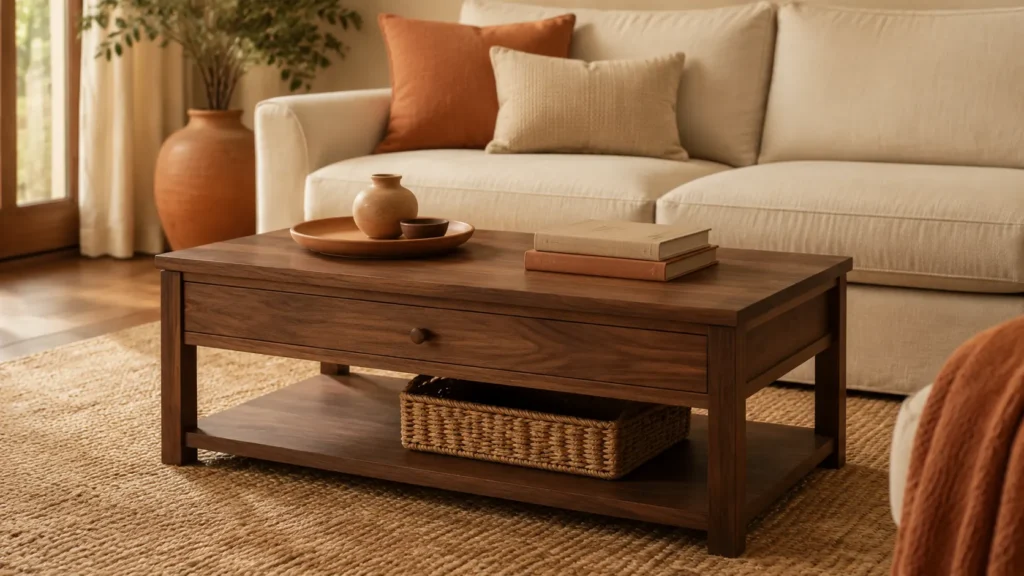
A coffee table with storage solves the one surface where a living room’s clutter always gathers — remotes, coasters, chargers, mugs, the lot. The coffee table is where a living room’s clutter goes to gather. Remotes, coasters, chargers, mugs, a stack of things you meant to deal with — it all lands on the one surface everyone reaches. And a plain coffee table has nowhere to put any of it, so it all sits on top, in full view, making the whole room look untidy.
The fix is simple: the surface that collects the most clutter should have the most storage built in. Swap a plain table for one that holds things, and the everyday churn disappears into a drawer instead of piling on the top.
This post contains affiliate links. As an Amazon Associate we earn from qualifying purchases — at no extra cost to you.
Why a Coffee Table With Storage Earns Its Space
A coffee table with a drawer or lower shelf takes up the exact same floor space as a plain one, but it does twice the work. The drawer swallows the remotes, coasters and chargers that make the surface look busy; the lower shelf holds books and a basket for the overflow. Same footprint, a room’s worth of extra storage.
In a living room short on storage, single-use furniture is a luxury you can’t afford. Every large piece should be pulling double duty — and the coffee table, being the one everyone uses most, is the first place that logic pays off.
The Three Storage Table Styles
Drawer tables. The tidiest option — a closed drawer hides everything, so the tabletop stays clear and the clutter is fully out of sight. Best for the small, un-pretty stuff: remotes, cables, odds and ends.
Shelf tables. A lower open shelf is display and storage at once — books, a tray, a basket tucked underneath. It reads relaxed rather than hidden, and works well when what you’re storing looks good enough to show.
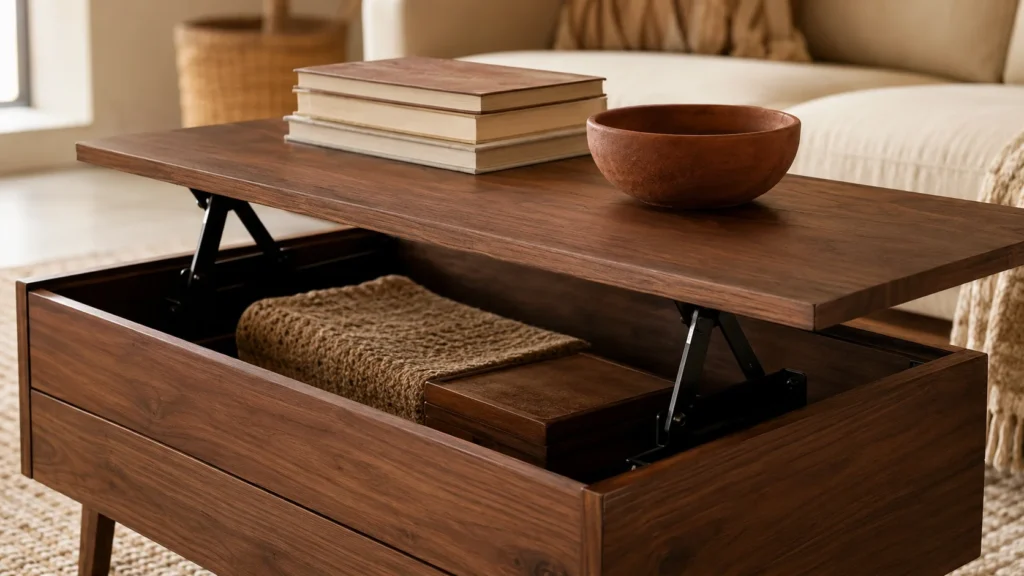
Lift-top tables. A lift-top coffee table is the multitasker — the top raises to become a work or eating surface, and there’s hidden storage underneath. Ideal in a small space or a room that doubles as an office.
Don’t Forget the Side Tables
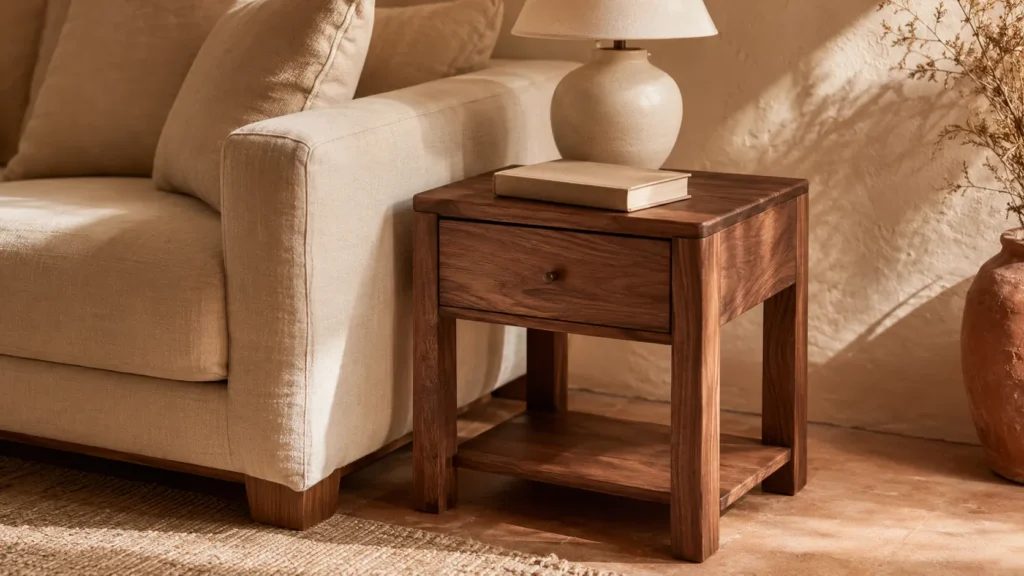
The coffee table gets the attention, but side tables collect just as much — the lamp, the book you’re reading, the phone, the mug. An open pedestal side table holds none of it; a side table with a drawer or cabinet gives all of it somewhere to go.
In a room where every surface fights clutter, the same rule applies to the small tables as the big one: closed storage beats an open surface every time. A pair of drawered side tables flanking the sofa quietly doubles your hidden storage without adding a single visible object.
What to Store Where
Match the storage to the churn each surface actually collects:
- Coffee table drawer → remotes, coasters, chargers, notepad
- Coffee table lower shelf → books, a tray, a basket for overflow
- Side table drawer → reading glasses, phone, small daily bits
- Lift-top → the laptop, the stuff you want fully gone when guests come
The point isn’t to fill every drawer — it’s to give the daily clutter a home three feet from where it lands, so it never makes it onto the open surface in the first place.
Keep It Warm-Toned
Storage tables in walnut, oak and warm mid-tones sit comfortably in a cozy room and hide their function — they read as good furniture that happens to hold things. Skip cold greys and high-gloss finishes, which announce themselves and break the calm. The best storage table is the one a guest would never guess was doing double duty.
Where to Start
If your coffee table is the messiest surface in the room, replace it with one that has a drawer or a shelf — it’s the single change that clears the most visible clutter, because it fixes the surface everyone uses most. Then add drawered side tables as you go, and the whole seating area quietly holds twice as much.
Not sure whether a storage table is your next move or something bigger? The quiz below reads your space in about two minutes and tells you where to start.