
If your living room is always cluttered despite constant tidying, the furniture isn’t the problem — the missing storage is. You tidy the living room, and for about a day it looks the way you want it to. Then the mail lands on the coffee table. The remotes migrate to the sofa. A charger cable, a water glass, a stack of things that don’t have anywhere else to go — and within a week the room is back to looking cluttered, even though you cleaned it.
Why a Living Room Stays Always Cluttered
Here’s the part that matters: this is not a discipline problem. You are not messier than other people. The room is missing something specific, and until it’s there, no amount of tidying holds.
This post contains affiliate links. As an Amazon Associate we earn from qualifying purchases — at no extra cost to you.
The core idea: a room looks cluttered when it has more things than it has places to put them. The stuff isn’t the problem — the missing homes are. You don’t need to own less. You need somewhere for what you own to live.
Why Tidying Never Sticks
When every surface is open — the coffee table, the console, the shelf — every object that enters the room has to sit out in the open, because there’s nowhere closed to put it. Tidying just means moving those objects into slightly neater piles. The room still reads as busy, because your eye is still landing on twenty small things at once.
The fix isn’t cleaning harder. It’s adding closed, contained storage so that the everyday stuff — the remotes, the cables, the kids’ things, the odds and ends — has somewhere to disappear to. A room with good storage looks tidy even when it isn’t, because the clutter is behind something.
The Mistakes That Keep a Room Cluttered
Buying more open shelving. Open shelves feel like storage, but they’re display. Every shelf you add is another surface that collects visible stuff. If the goal is less clutter, you want closed storage — baskets, cabinets, lidded boxes — not more open ledges.
Using storage that doesn’t match the room. Plastic bins and wire baskets do hold things, but they read as clutter themselves. Storage only works when it looks like it belongs — a woven basket, a wooden box, a fabric bin in your palette. The container has to earn its place in the room.
Storing things far from where they’re used. If the remotes live in a drawer across the room, they’ll end up back on the sofa within a day. Storage has to sit where the mess actually happens. A basket by the sofa, a tray on the table, a box under the console — close to the point of use, or it won’t get used.
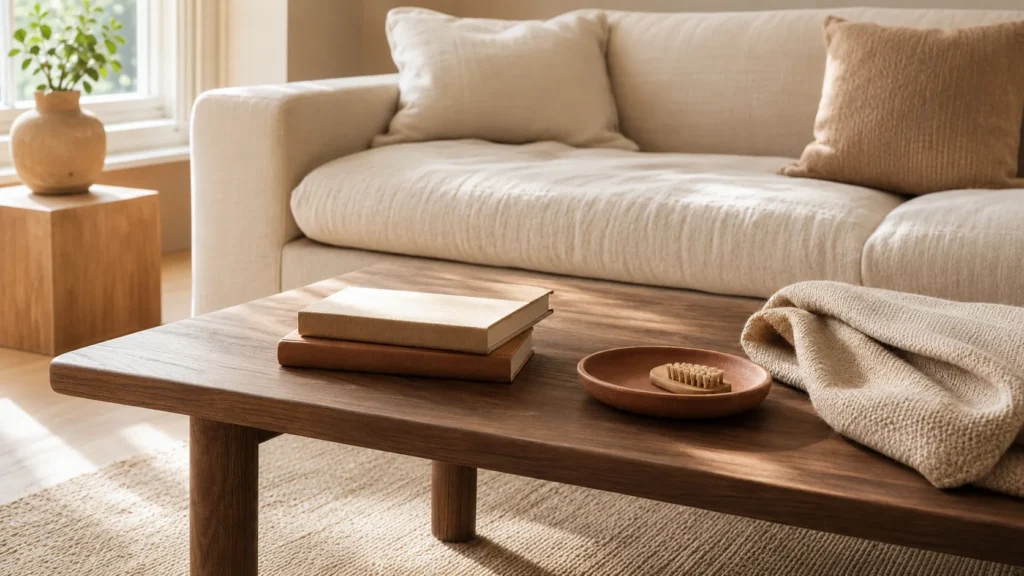
Choosing furniture that only does one job. A plain coffee table holds nothing. A coffee table with a shelf, a drawer, or a lift-top holds a room’s worth of everyday clutter and takes up the exact same floor space. In a room that struggles with storage, every large piece should be pulling double duty.
Your First Three Priorities
In this order. Each one does more than the one before it.
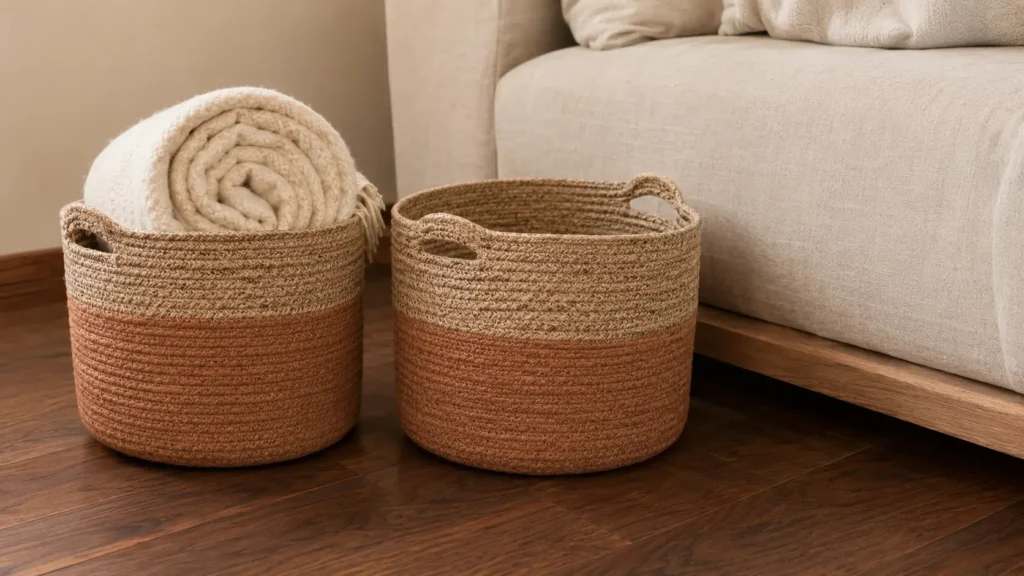
1. Contain the small daily clutter. Start with a woven storage basket or two, placed exactly where the mess collects — by the sofa, under the coffee table, next to the entry point. This is the cheapest change and the one you’ll feel first, because it catches the everyday stuff before it spreads across surfaces. For the small odds and ends that don’t have a category, a set of lidded fabric boxes keeps a busy shelf reading as calm. And the single most satisfying five-minute fix is a cable management box — it hides the tangle of chargers and cords that makes a whole corner look messy.
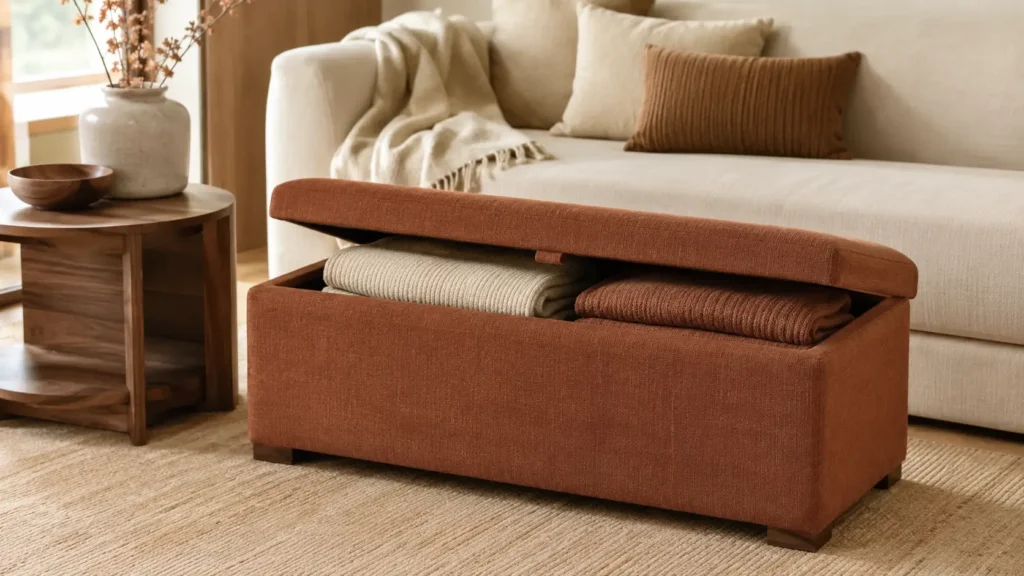
2. Add one piece of hidden-storage furniture. A storage ottoman, a coffee table with a lower shelf or drawer, or a bench that opens. One piece that swallows a large volume of clutter — blankets, magazines, chargers, toys — and hands you back a clear surface. This is where a cluttered room genuinely turns.
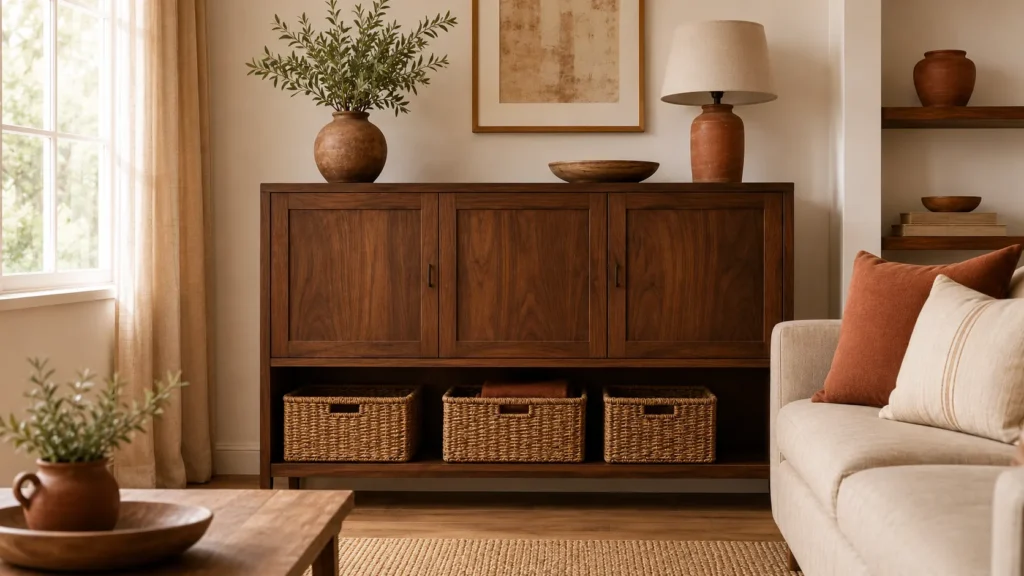
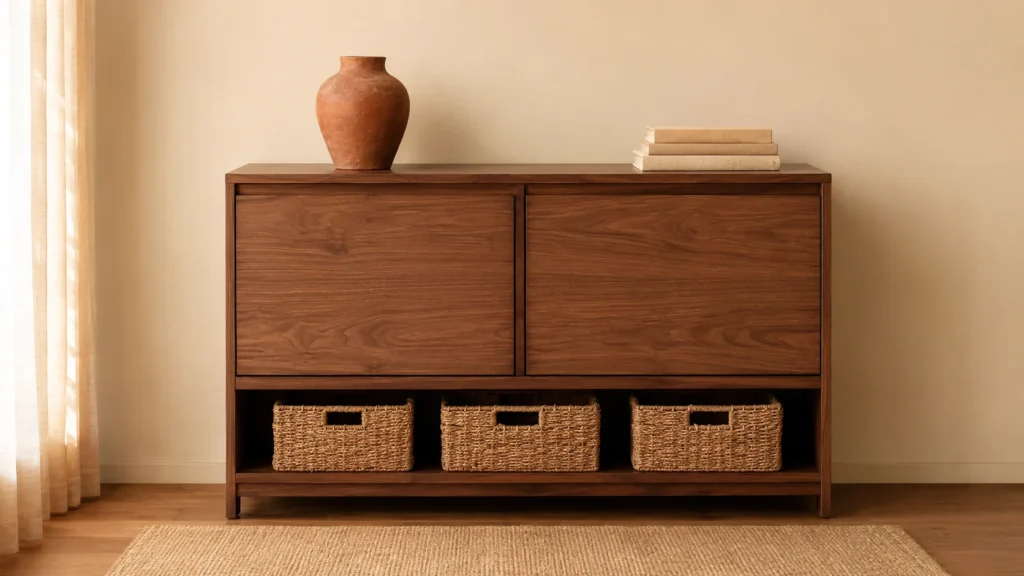
3. Give the room a closed home for the rest. A cabinet or console with doors for the things that don’t have a category — the “everything else” of the room. Once the miscellaneous stuff is behind a door, the room reads as calm even on a bad day.
What To Avoid
- More open shelving when the goal is less visible stuff
- Plastic bins in a room you want to feel warm
- Storage placed far from where the mess actually happens
- Single-use furniture in a room short on storage
- Trying to declutter your way out of it instead of adding homes
The Order That Works
If you’re doing one at a time, do them in this order:
1. Baskets — cheapest change, felt the same day.
2. One hidden-storage piece — an ottoman or storage table does the heavy lifting.
3. A closed cabinet — handles the everything-else.
Each layer builds on the one before it. By the time the cabinet arrives, the room already reads as calm.
Not Sure Which Your Room Needs First?
Every room feels cluttered for slightly different reasons — some need more contained storage, some need one big hidden-storage piece, some just need a closed home for the odds and ends. The quiz below reads your space in about two minutes and tells you what to fix first.