
Your room is finished. It just doesn’t feel like yours
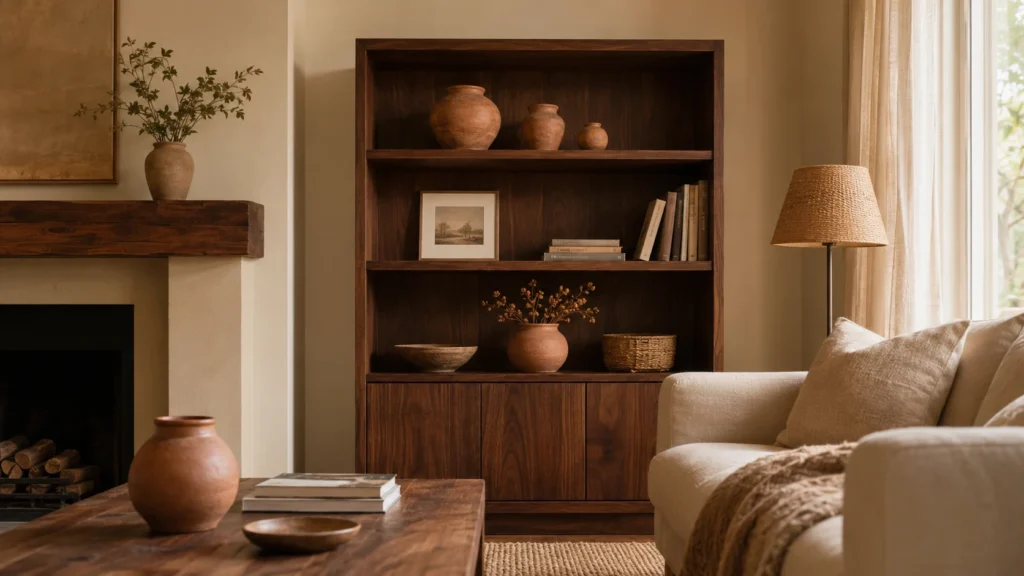
The furniture is there. It matches. Someone walking in would call it done. But it reads like a showroom or a rental — pleasant, tidy, and strangely anonymous. Nothing in it says a particular person lives here. That’s the result you got, and it’s one of the most fixable there is.
A room lacks personality when it has no layer of you in it — no objects with a story, no display that reflects a taste, nothing your eye lands on that couldn’t be in anyone else’s home. The fix isn’t buying more furniture. It’s adding the small, personal, curated layer that turns a furnished room into someone’s room.
This page contains affiliate links. As an Amazon Associate we earn from qualifying purchases — at no extra cost to you.
Why This Is Your Result
If this is your room, some of these will feel familiar:
- The room looks “nice” but you couldn’t say what your style is
- Surfaces are clear — but bare, not curated
- The walls are mostly empty, or hung with generic art
- Nothing in the room has a story behind it
- It could be anyone’s living room
The core idea: personality isn’t about spending more — it’s about what you put on display. A furnished room with no personal layer reads as anonymous. The same room with a few curated, meaningful objects reads as lived in by someone specific. You add character, you don’t buy it.
Where to Start
Personality builds in three layers, each one adding more of you to the room.
Style Your Surfaces
Bare surfaces read as unfinished; over-full ones read as cluttered. The middle — a few considered objects grouped on a shelf, table or mantel — is what reads as personality. Books you’ve actually read, a vase, a small object with meaning, arranged in threes. This is the fastest way to make a room feel curated rather than furnished.
Put Something on the Walls
Empty walls are the single biggest reason a room feels impersonal. Art, framed prints, a gallery arrangement — anything that reflects a taste rather than filling a space. Walls are where personality shows loudest, and where most anonymous rooms are silent.
Add the Personal Layer
The final layer is the one that couldn’t be anyone else’s: objects with a story, a collection, things you actually love. This is what separates a room styled from a catalogue from a room that belongs to a person. A few meaningful things, displayed deliberately, do more than a whole shopping trip.
Common Mistakes to Skip
Buying a “set” to solve it. A matched décor set adds furniture, not personality — it often makes the room feel more like a showroom, not less.
Leaving the walls for last. Bare walls undo everything else. They’re the first thing to fix, not the last.
Over-styling. Personality isn’t clutter. A few meaningful things beat a surface crowded with objects.
Copying a look exactly. A room styled to match a photo reads as someone else’s taste. The point is yours.
The One Rule
Display the things that are actually yours — the books, the objects, the art you’d choose — rather than filling the room with pieces chosen to match. A room reads as having personality when it reflects a person, and no amount of coordinated furniture does that on its own.
Get Your Room Plan in Your Inbox
Get your décor plan as a simple, save-it-for-later guide — plus practical décor notes, no spam, unsubscribe anytime.