
The room isn’t small. It’s just dark
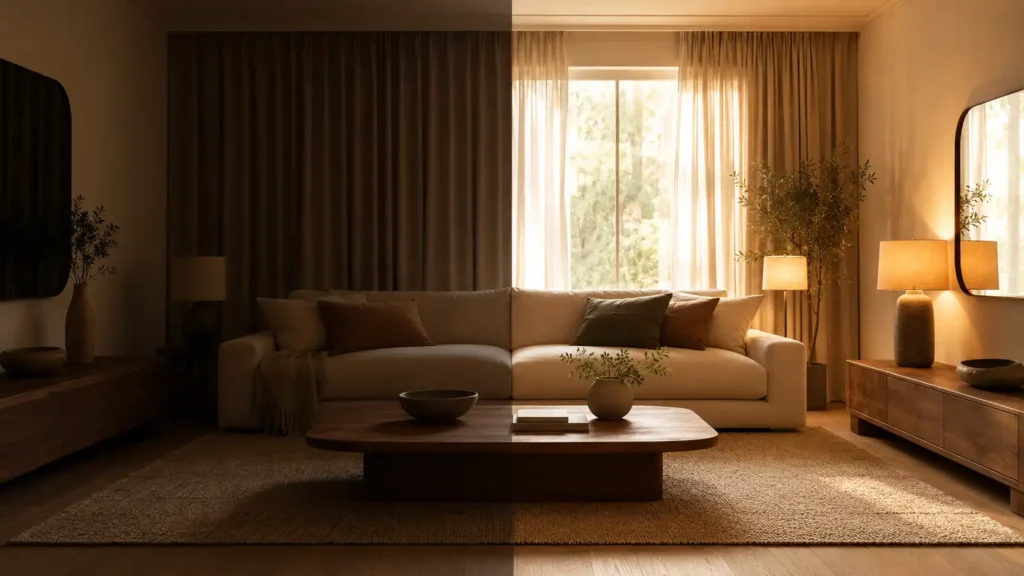
It feels dim, flat and closed-in — like it never quite wakes up, even in the daytime. You’ve maybe blamed the room’s size or the windows, but the real problem is usually light: not enough of it, coming from the wrong places, bouncing off nothing. And light is one of the most fixable problems there is.
A room feels dark when it relies on too few sources and has nothing to reflect what light there is. The fix isn’t a bigger window. It’s more layers of light, placed low and spread around, plus surfaces that bounce it back into the room.
This page contains affiliate links. As an Amazon Associate we earn from qualifying purchases — at no extra cost to you.
Why This Is Your Result
If this is your room, some of these will feel familiar:
- One ceiling light does all the work
- The room feels dim even with the light on
- Corners stay dark and the room feels smaller for it
- It feels flat — no glow, no warmth, no depth
- You’ve thought “this room is just dark”
The core idea: a dark room is usually an under-lit one, not a window problem. One overhead light flattens everything and leaves the edges dark. Several smaller light sources, placed low and spread around — plus reflective surfaces — is what makes a room feel bright, warm and open.
Where to Start
Light builds in three layers, each adding brightness and depth.
Add Light Below Eye Level
The single biggest change is to stop relying on the ceiling light. Add lamps — a table lamp, a floor lamp, something low on a shelf. Light coming from several low points fills a room far more warmly and evenly than one bright source overhead ever can.
Reflect What Light You Have
A mirror placed opposite or beside a window doubles the daylight in a room. Reflective and light-toned surfaces — pale textiles, a glass or metal accent — bounce light around instead of absorbing it. This is how a dark room borrows brightness it doesn’t technically have.
Lighten the Heavy Elements
The final layer is subtracting darkness: swapping heavy dark textiles for lighter ones, letting more daylight in, choosing warm-toned rather than cold surfaces. Lightening what absorbs the light lets the light you’ve added actually fill the room.
Common Mistakes to Skip
Making the ceiling light brighter. A brighter single overhead just flattens the room more — it doesn’t fix darkness, it deepens the contrast.
Ignoring the corners. Dark corners make a whole room feel dim and smaller. Light the edges, not just the centre.
Forgetting reflection. Without mirrors and light surfaces, added light gets absorbed instead of spread.
Keeping heavy dark textiles. Dark, heavy fabrics eat light — they work against everything else you add.
The One Rule
Light a room from several low points, not one high one — and give that light something to bounce off. Warmth and brightness come from layered light and reflection, not from a single brighter bulb overhead.
Get Your Room Plan in Your Inbox
Get your décor plan as a simple, save-it-for-later guide — plus practical décor notes, no spam, unsubscribe anytime.