
Your room isn’t unfinished. It’s just missing warmth.
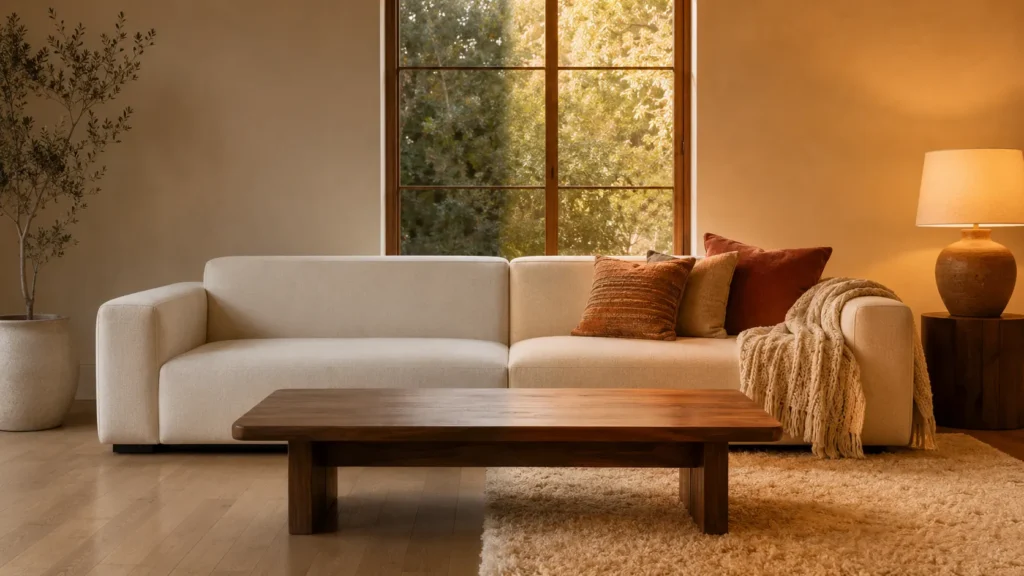
You didn’t get this result because the room is half-done. The furniture’s there, the walls are painted — someone walking in would call it finished. But it reads flat and a little cold: nothing to sink into, nothing catching the light, nothing your eye lands on and rests.
Rooms like this are almost always missing the same thing — not more objects, but more layers. Texture, warmth of light, and something soft enough to change shape when you touch it. The good news: this is the most fixable room problem there is. You’re not rearranging or repainting. You’re adding a few things, in a specific order, and the room resolves.
This page contains affiliate links. As an Amazon Associate we earn from qualifying purchases — at no extra cost to you.
Why This Is Your Result
If this is your room, some of these will feel familiar:
- You’ve bought things for the room, but it still looks the same
- It photographs worse than it looks — or looks fine in photos and cold in person
- Every surface is hard: wood, glass, painted wall, more wood
- One bright ceiling light does all the work, all day
- You describe the room as “fine”
The core idea: warmth isn’t a colour, it’s a count. A room feels cold when there are too few soft surfaces and too few light sources. Fix the count and the temperature changes on its own — no repainting required.
Where to Start
You don’t need everything below. Warmth builds in three stages, cheapest first — start wherever your room needs it most, and each stage does more than the one before it.
Start Cheap — Warm the Light
The fastest change costs the least: stop relying on the overhead light. Add a couple of low light sources — a table lamp and something on a shelf — with warm-toned bulbs (2700K). Light coming from several low points warms a room more than any single fix. Full walkthrough in layered lighting, explained — what to put where.
The Real Fix — Add Soft Surfaces
A cold room is usually an all-hard room. The fix is texture you can touch: a chunky knit throw draped over an arm, and two or three textured cushions in warm tones — rust, terracotta, cream. Soft surfaces are what make a room read as lived-in rather than staged. More in the texture layering guide.
The Full Room — Anchor and Frame
The bigger pieces reset the whole space. A large area rug grounds the seating and absorbs the echo that makes hard rooms feel unlived-in, and floor-length curtains frame the windows and soften the light. If your rug feels too small, that’s the most common mistake — covered in choosing a rug size.
Common Mistakes to Skip
Adding more furniture. A cold room doesn’t need another object taking up floor space — it needs the objects already there to feel better. More furniture usually makes it colder, because it adds hard surfaces.
Buying one very small rug. An undersized rug floating in the middle of the floor makes a room look more unfinished, not less. If a rug can’t reach the front legs of your seating, it’s working against you.
Leaving the ceiling light as the only light. Overhead light flattens everything and drains colour out of a room. It’s the single biggest cause of the feeling you’re trying to fix.
Matching everything. A cushion set, a throw and a rug all in the same tone reads as a showroom, not a home. Warmth comes from variation in texture, not agreement in colour.
The One Rule
Warm the light first, add soft things you can touch, then anchor the room with a rug large enough to reach the seating. Warmth is a count of soft surfaces and low light sources — raise the count and the room resolves on its own, no repainting required.
Read Next
- How to make a small living room feel warmer without adding furniture
- Layered lighting, explained — what to put where
- Choosing a rug size (the mistake almost everyone makes)
Get Your Room Plan in Your Inbox
Get your room plan as a simple, save-it-for-later guide — plus practical décor notes, no spam, unsubscribe anytime.